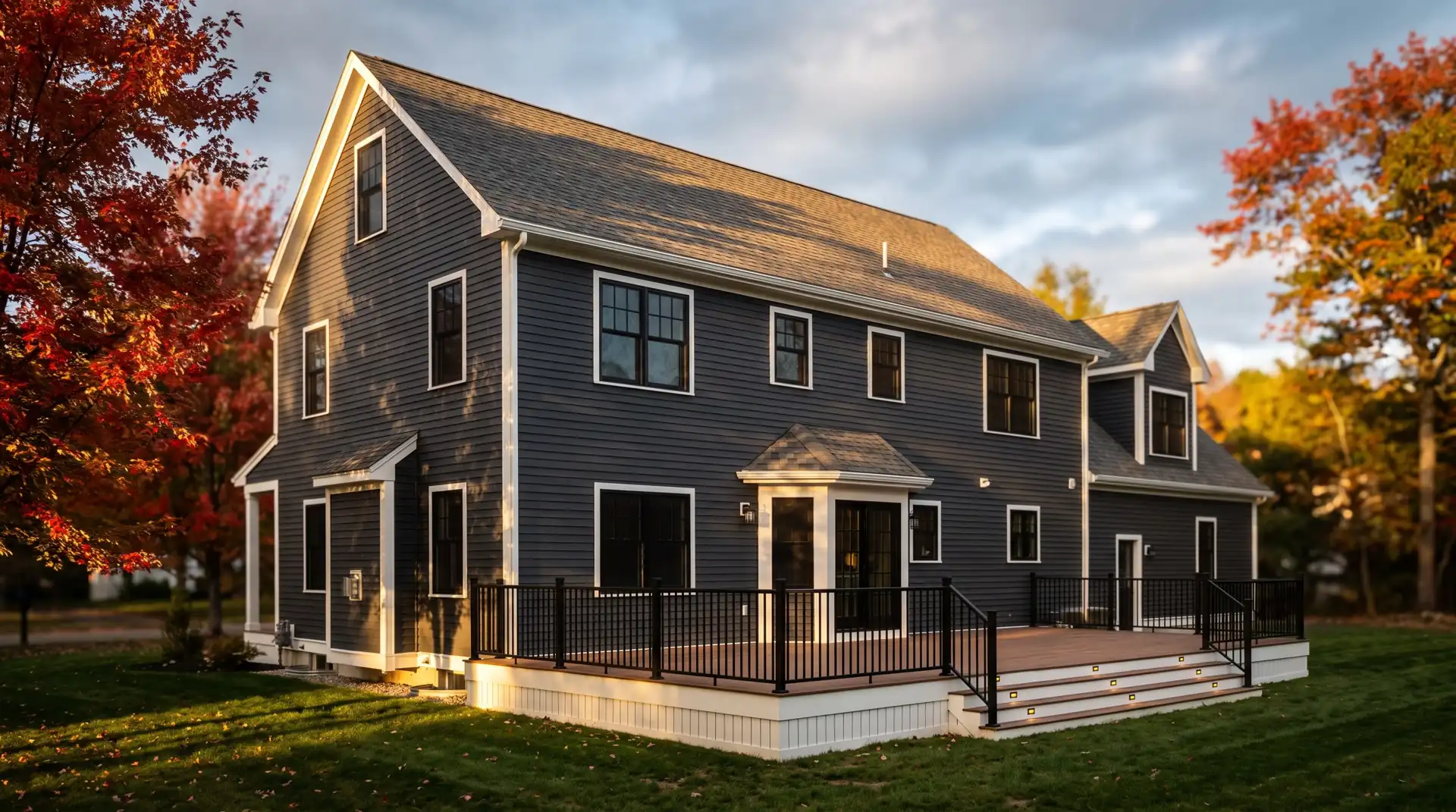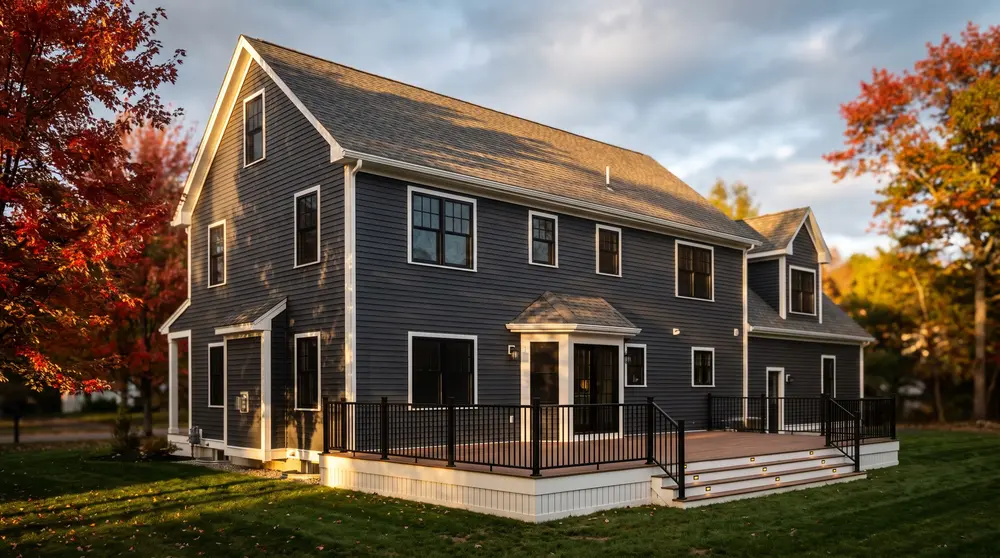

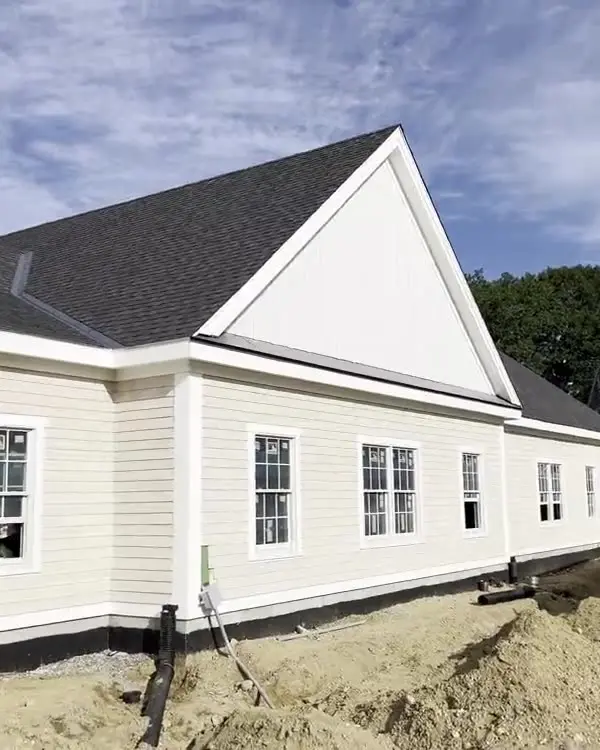
Architectural shingle is the roof you see on most capes, colonials and ranches across Worcester County, and for good reason. It's thicker than the old three-tab, it hides small deck imperfections, and it gives your roof some depth and shadow instead of the flat stripes you see on houses that were roofed decades ago.
How it's nailed matters as much as what it is. We fasten every course in a high-wind nailing pattern, which puts extra nails where a gust tries to lift the shingle. That's the difference between a roof that rides out a nor'easter and one that leaves tabs in your yard.
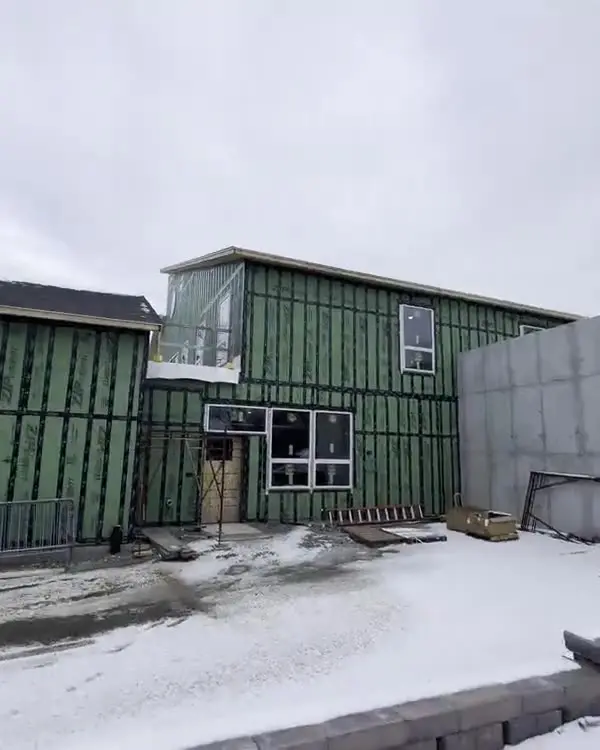
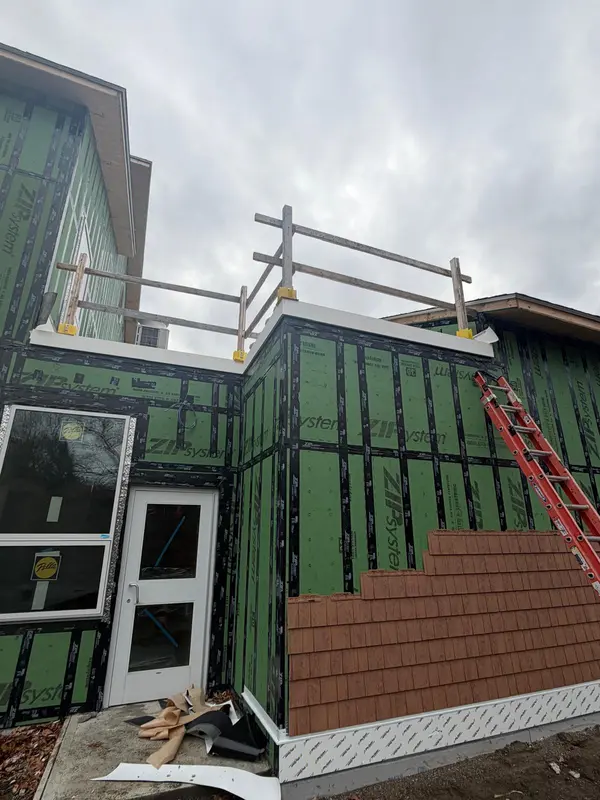
In Ashburnham, we replaced a full roof and restored the front entry on the same house. The old layers came off, the deck was checked and photographed, and the new shingles went on over a clean, sound base. Tear off, inspect, photograph, then build. We follow that order on every roof, whether it's a small ranch or a big two-story colonial.
What's included
- Tear-off of your old shingles down to the deck
- Deck inspected and photographed before anything covers it
- Damaged sheathing pointed out and priced in writing
- Architectural asphalt shingle in a high-wind nailing pattern
- Step and counter flashing at chimneys and sidewalls
- Valleys and skylights flashed and sealed
- Dumpster on site and shingles kept out of your landscaping
- Magnet sweep of your driveway and lawn at the end of each day
Signs it's time
- Shingles curling, cracking or missing after a windstorm
- Granules piling up in your gutters or at the bottom of downspouts
- Bare spots or dark streaks spreading across the roof
- Ice dams forming along your eaves every winter
- Water stains on the ceiling under a roof transition
What Happens on Tear-Off Day
The crew shows up, sets the dumpster and protects your shrubs and siding. Old shingles come off section by section. Once the deck is bare, we walk it, look for soft or delaminated sheathing and take photos. You'll see what was under your old roof before we cover it again.
Then the new roof goes on. Each course of architectural shingle gets fastened in the high-wind pattern, and our crew stops at every chimney, wall, valley and skylight to flash it properly. At the end of the day, we clear the site and run a magnet over your driveway and yard so no roofing nails are left behind.
What happens behind your asphalt shingle roofing
You won't see most of this once the job is done. That's why we photograph it before we cover it.
- Substrate inspected and photographed before it's covered
- Every opening flashed so water gets directed back out
- Seams and laps of the weather barrier taped and sealed
- Fastening and clearances per the manufacturer's manual
- Soffit ventilation kept open, corners and returns sealed
- Site cleared and magnet swept at the end of every day