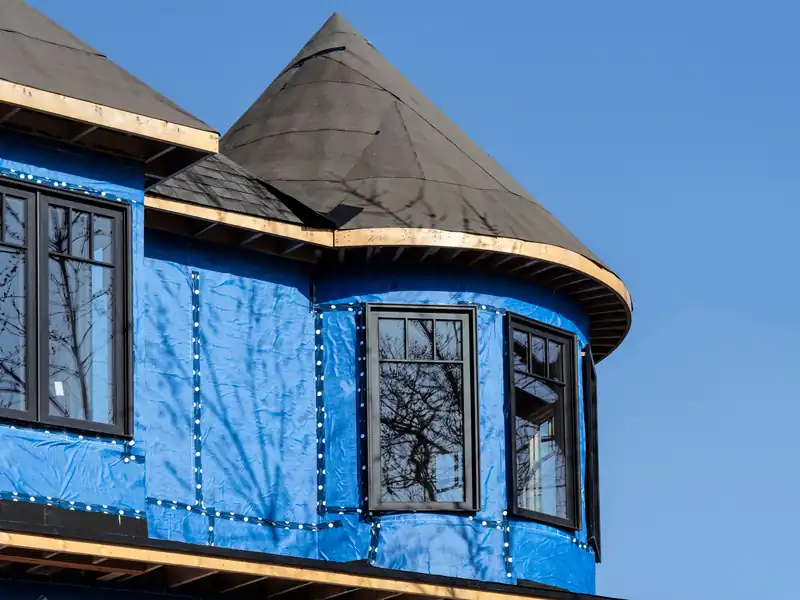

Contractors use a lot of acronyms for the layers behind siding. Two of them cause the most confusion. An AWB is an air and water barrier. It stops liquid water and air, but it lets water vapor pass through. An AVB is an air and vapor barrier. It stops air, liquid water and water vapor. The names differ by one word, and that word changes how your whole wall handles moisture. Most homeowners never hear either term until a contractor uses it in a quote, so it helps to know what each one does.
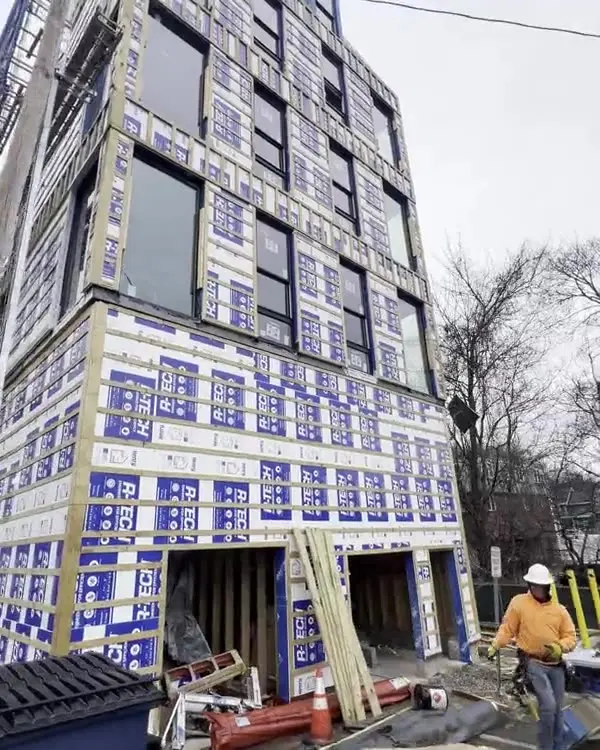
The difference comes down to permeance. Permeance is a measure of how easily water vapor moves through a material, rated in perms. A low number means the material blocks vapor. A higher number means vapor passes through more easily. House wraps like DuPont Tyvek HomeWrap are vapor open, so they act as an air and water barrier. Many peel-and-stick membranes and foil facings are vapor closed, so they act as an air and vapor barrier. Common systems include DuPont Tyvek, Typar and Henry Blueskin. Tell us which one you want and we price that exact product.
Why does this matter for your home? Walls get wet. Rain finds its way in, and indoor air carries moisture into wall cavities. A wall survives as long as it can dry faster than it gets wet. Put a vapor-closed layer in the wrong spot and you block the drying path. We'll walk you through where each layer belongs on your house before we recommend a product. A barrier in the right place lets the wall dry. The same barrier in the wrong place can hold moisture against the sheathing for months.
What's included
- Wall assembly reviewed before we quote
- Existing layers identified at tear-off
- Sheathing condition photographed
- Barrier type matched to your wall
- DuPont Tyvek HomeWrap where vapor open fits
- Seams, laps and edges taped and sealed
- Openings flashed into the barrier
- Drying path explained in your estimate
Signs it's time
- Moisture or mold found in wall cavities
- Peeling paint that keeps coming back
- Plastic sheeting found behind drywall
- Condensation on the inside of cold walls
- Old felt paper torn or missing under siding
Where vapor control belongs in a cold climate
In a Massachusetts winter, warm indoor air holds more moisture than the cold air outside. Vapor moves from warm to cold, so it pushes outward through your walls. If it reaches a cold surface, like the back of the sheathing, it can condense into water. That's why cold-climate building practice puts vapor control on the warm side of the insulation, which is the inside of the wall. Interior paint and drywall already slow some of that vapor.
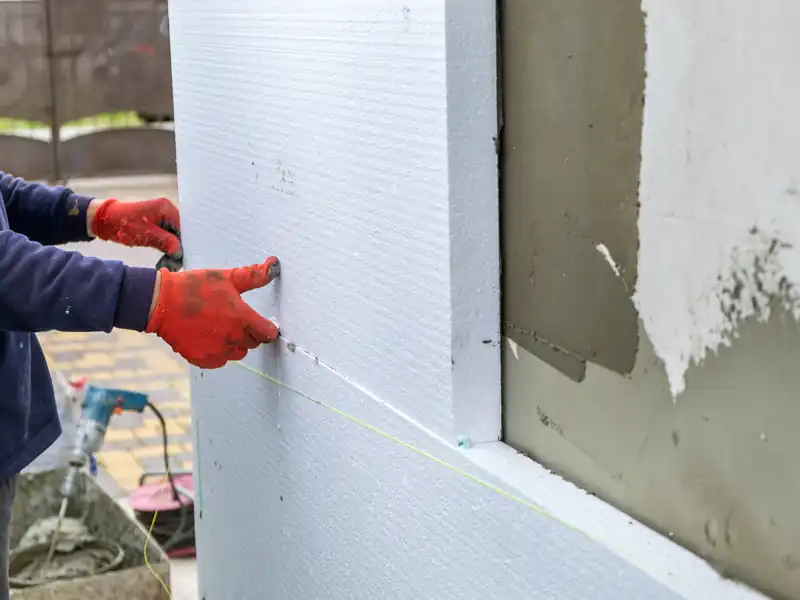
On the outside, the wall usually needs to stay vapor open so moisture can dry outward. That's the job of an air and water barrier under the siding. The exception is a wall with enough exterior insulation, such as rigid foam, to keep the sheathing warm all winter. In that case a vapor-closed layer on the outside can work, as long as the wall can still dry to the inside.
The mistake to avoid is trapping the wall between two vapor barriers, one inside and one outside. Any water that gets in has no way out. For most homeowners re-siding a typical house, the right call is a vapor-open AWB like DuPont Tyvek HomeWrap, taped and flashed, with the interior left as it is. We'll confirm that after we see your wall. If your house already has plastic sheeting behind the drywall, that affects the plan, and we'll tell you how.
What happens behind your AWB vs AVB
You won't see most of this once the job is done. That's why we photograph it before we cover it.
- Substrate inspected and photographed before it's covered
- Every opening flashed so water gets directed back out
- Seams and laps of the weather barrier taped and sealed
- Fastening and clearances per the manufacturer's manual
- Soffit ventilation kept open, corners and returns sealed
- Site cleared and magnet swept at the end of every day