
Your deck takes more abuse than any other part of your house. Snow sits on it for weeks. Meltwater freezes in the joints between boards. Spring rain soaks the framing, and a humid July keeps it wet. A deck that looked fine in October can feel soft by April, and the rot almost always starts where you can't see it: at the ledger, the posts and the footings.
So we start underneath. Before you get a number, we look at what's holding your deck up now. Are the footings below frost? Is the ledger flashed against your house, or bolted straight to the rim with water running behind it? Are the posts sitting in soil? Those answers decide whether we resurface, rebuild part of it, or tear it down to the ground.
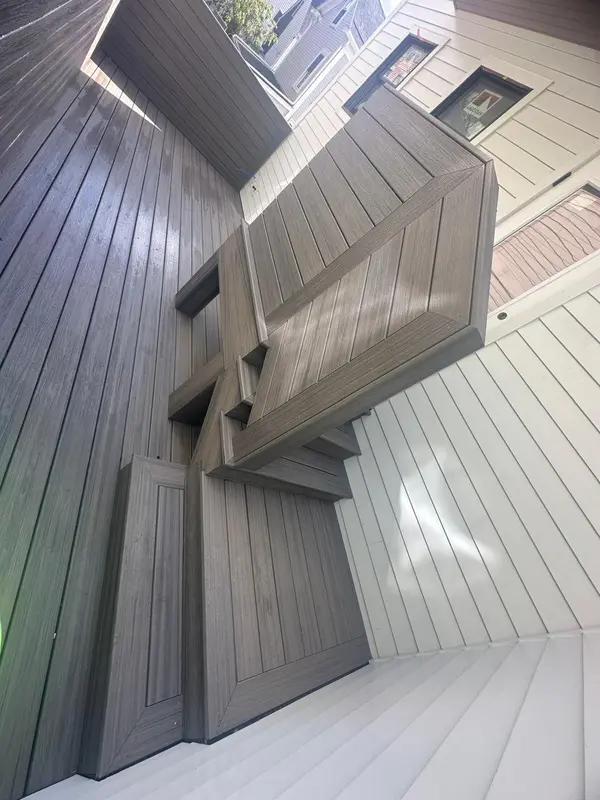
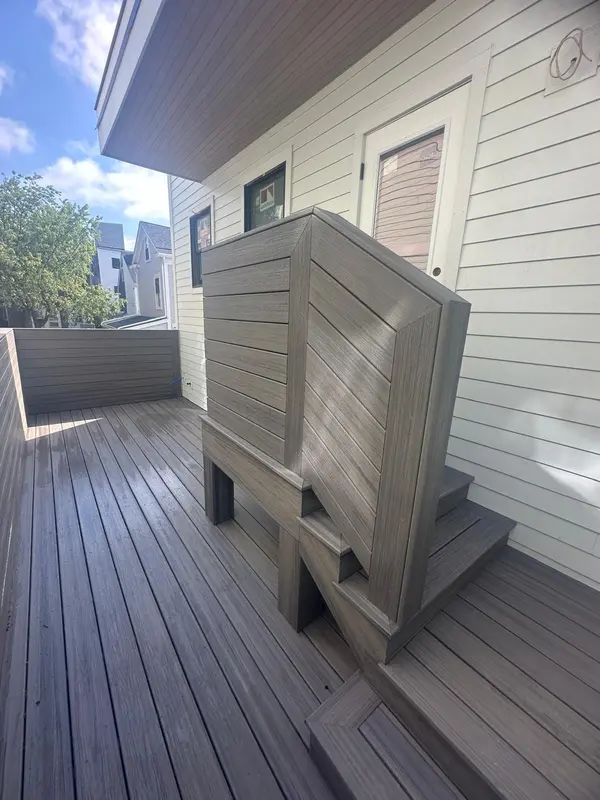
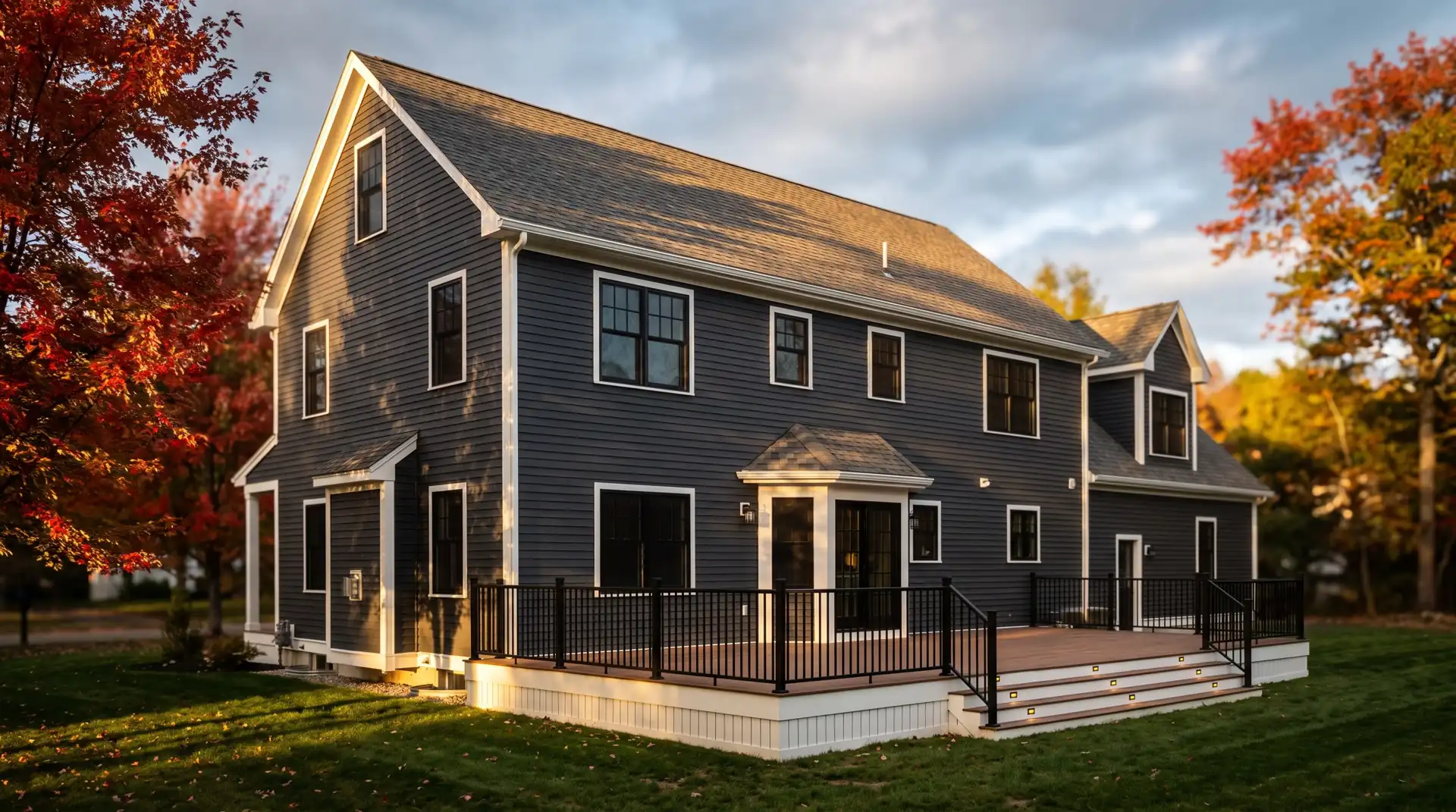
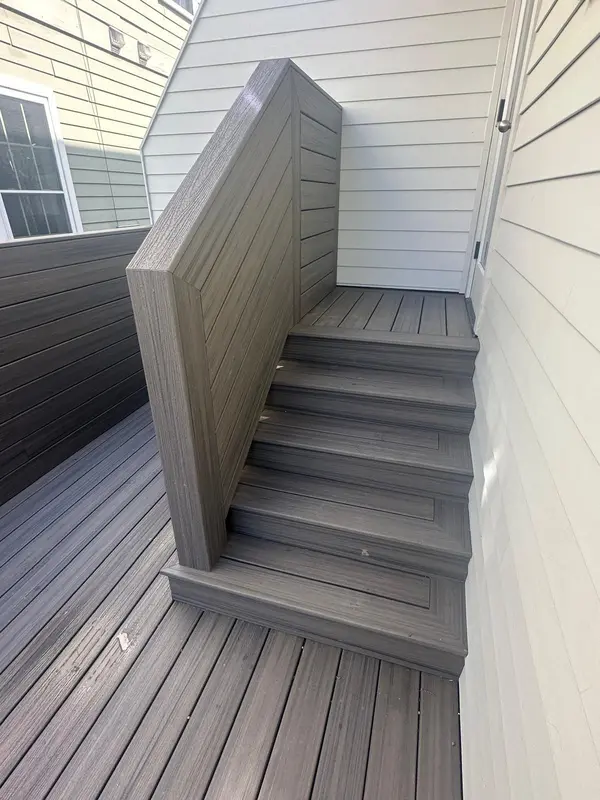
Then you pick the surface. Trex and composite boards skip the yearly staining and won't splinter under bare feet. Pressure-treated wood costs less up front and takes stain well. Either way, the framing underneath is built to carry snow load, the stairs are laid out so they feel right to climb, and every rail gets fastened so it doesn't wobble when someone leans on it.
What we install
- Trex composite decking
- Composite decking boards
- Pressure-treated framing lumber
- Sonotube concrete footings
- PVC trim on fascia and stair risers
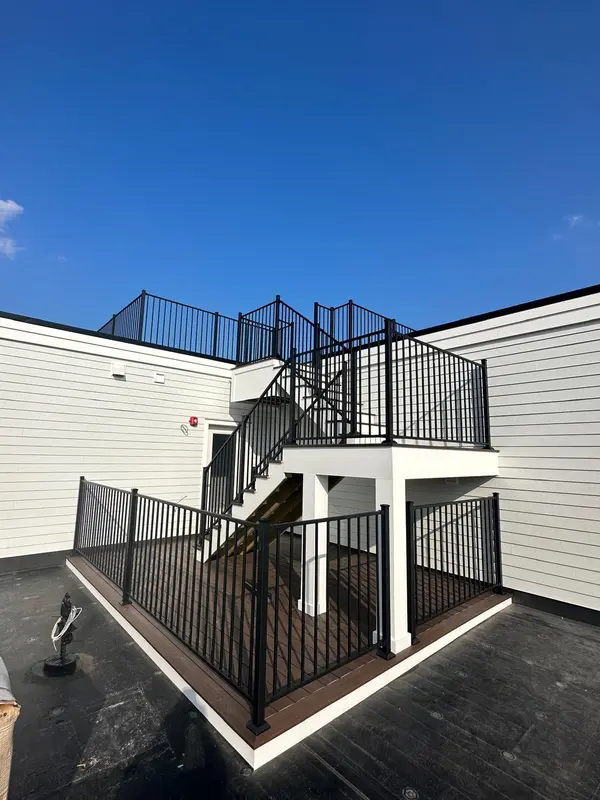
- Stairs and railings built to match your deck