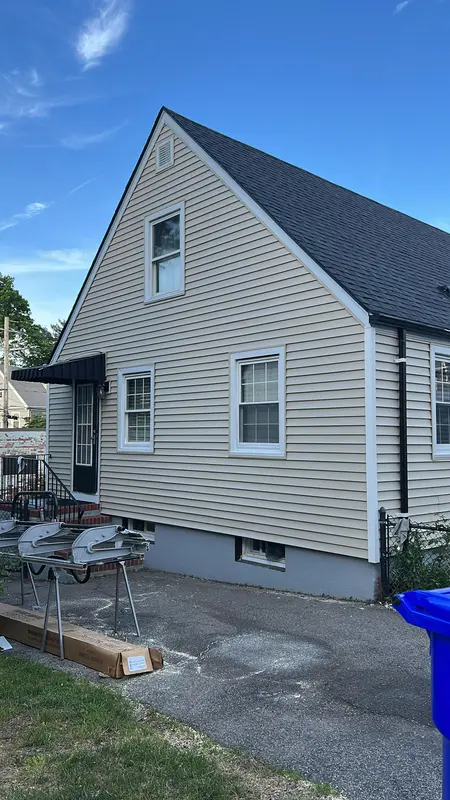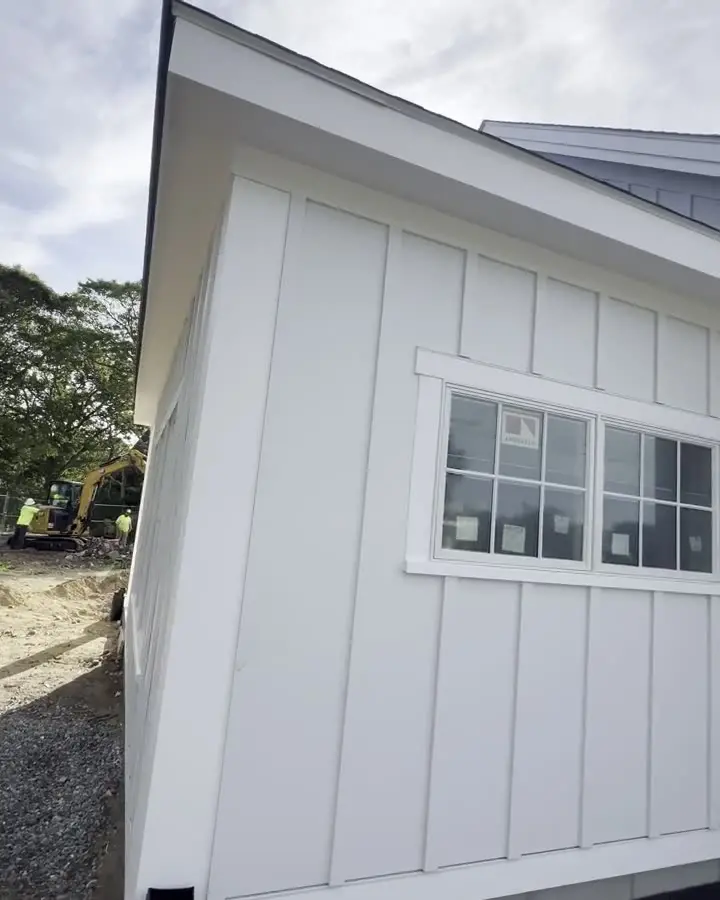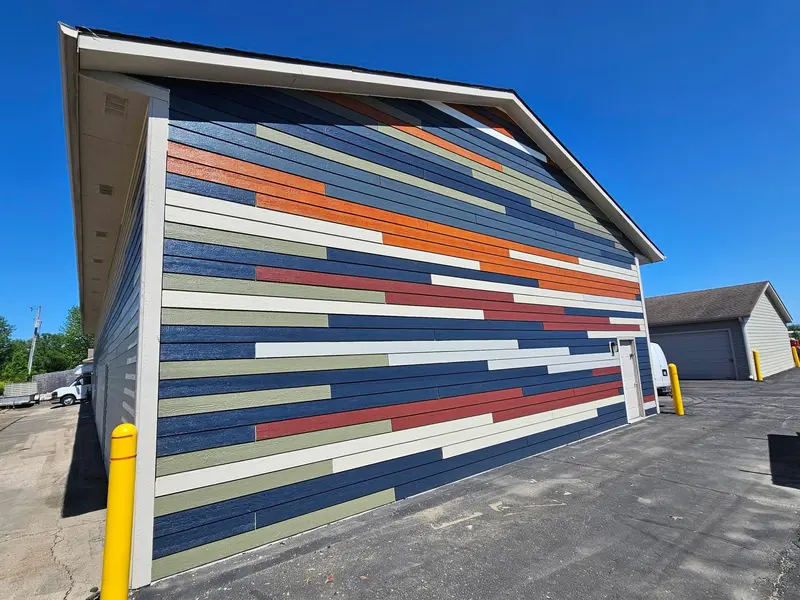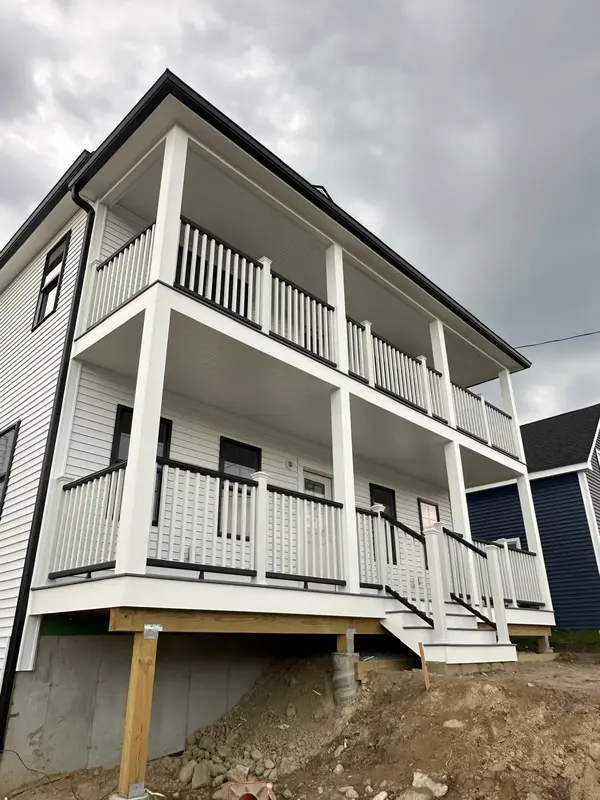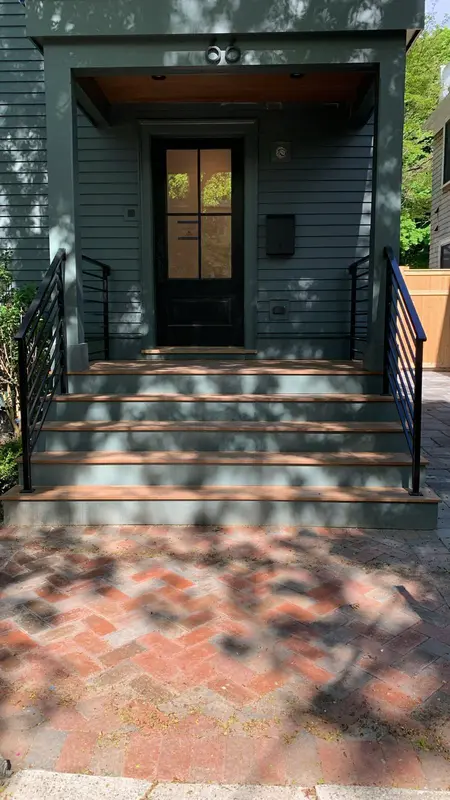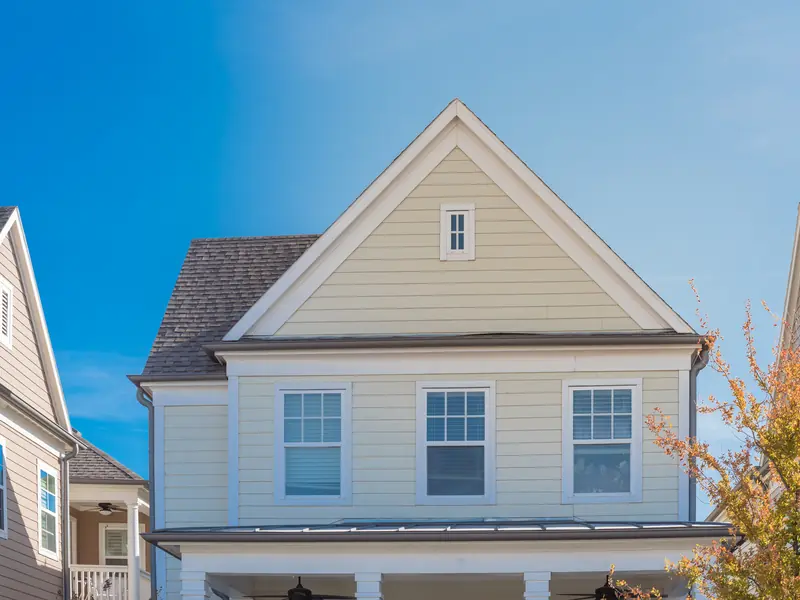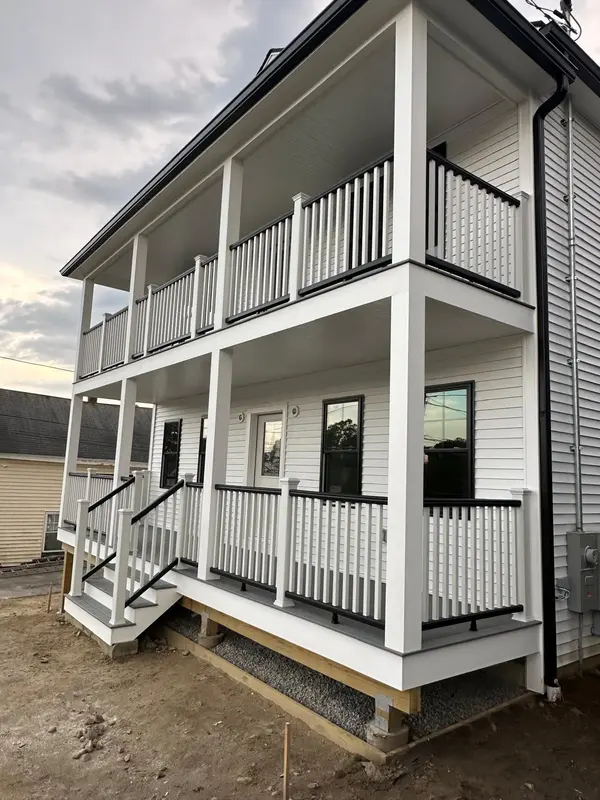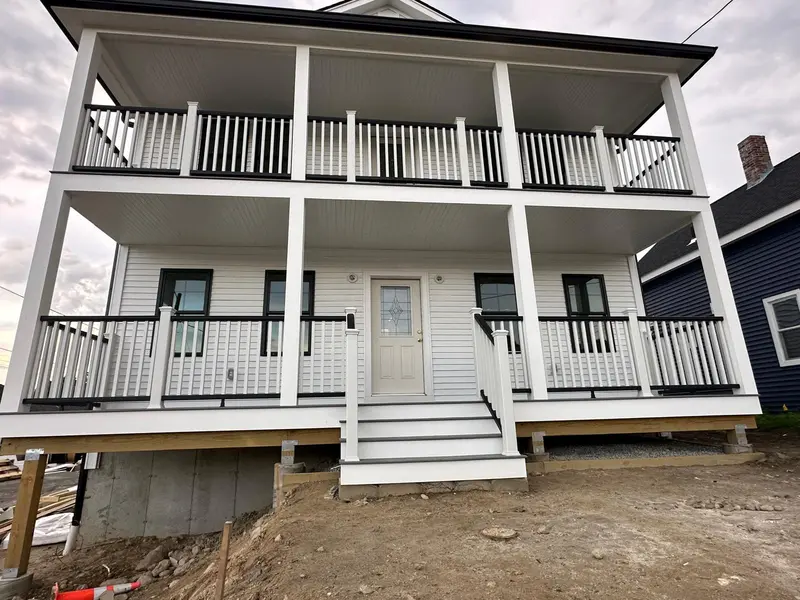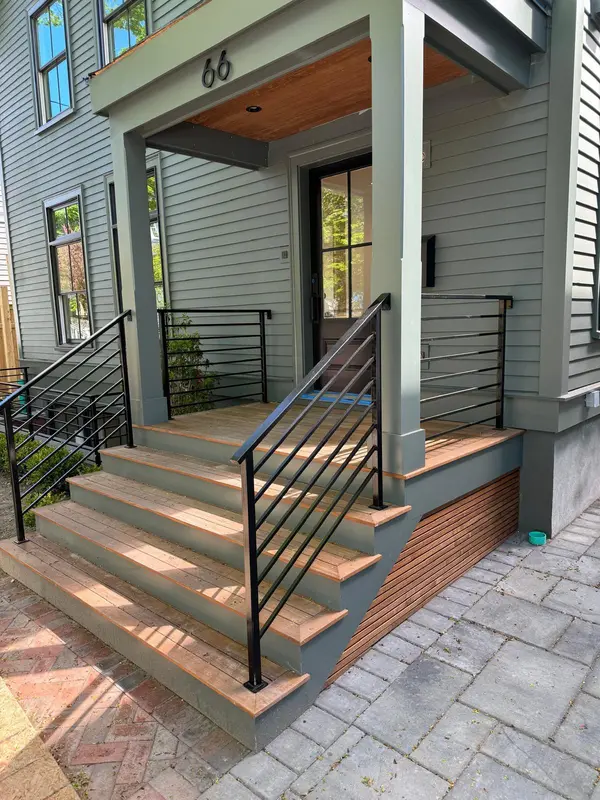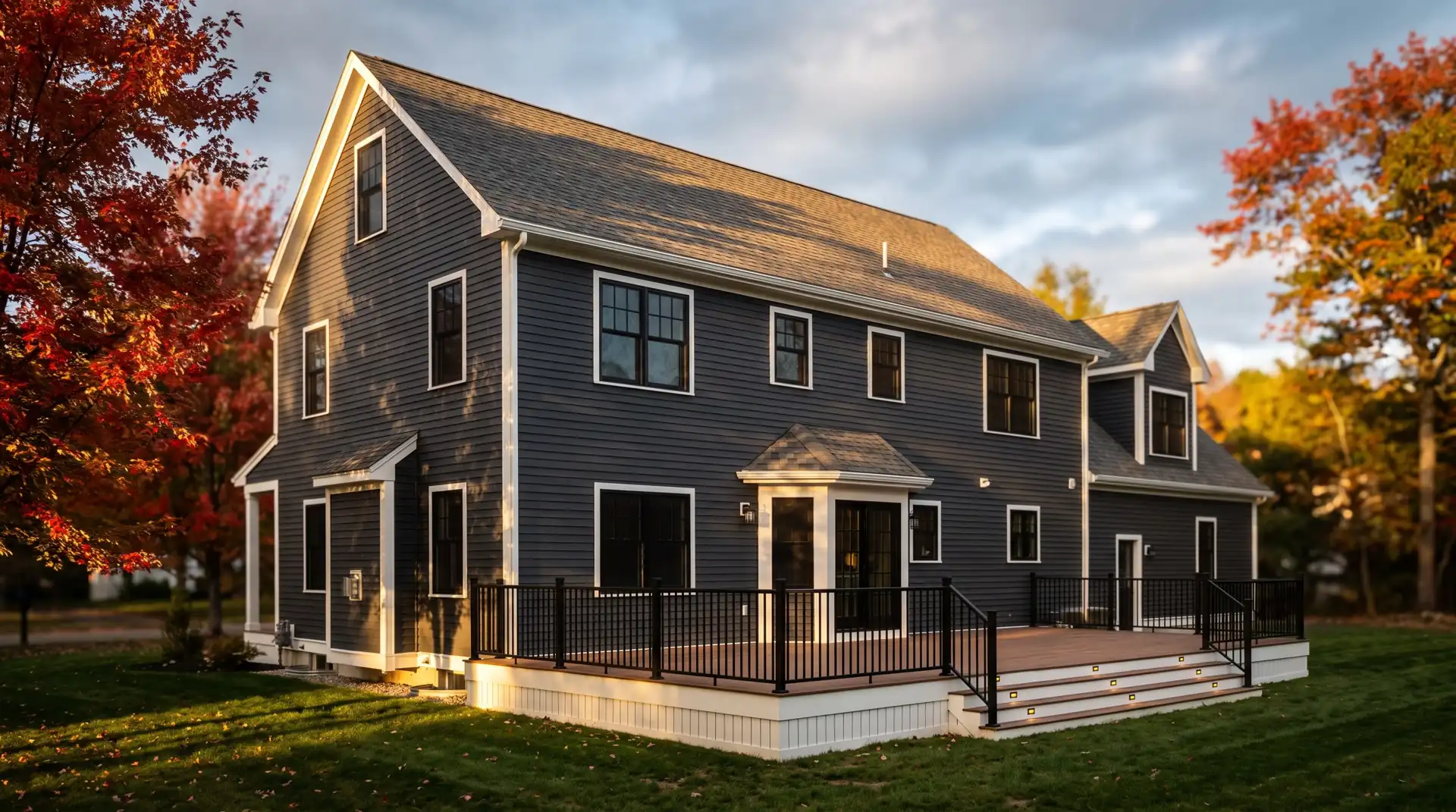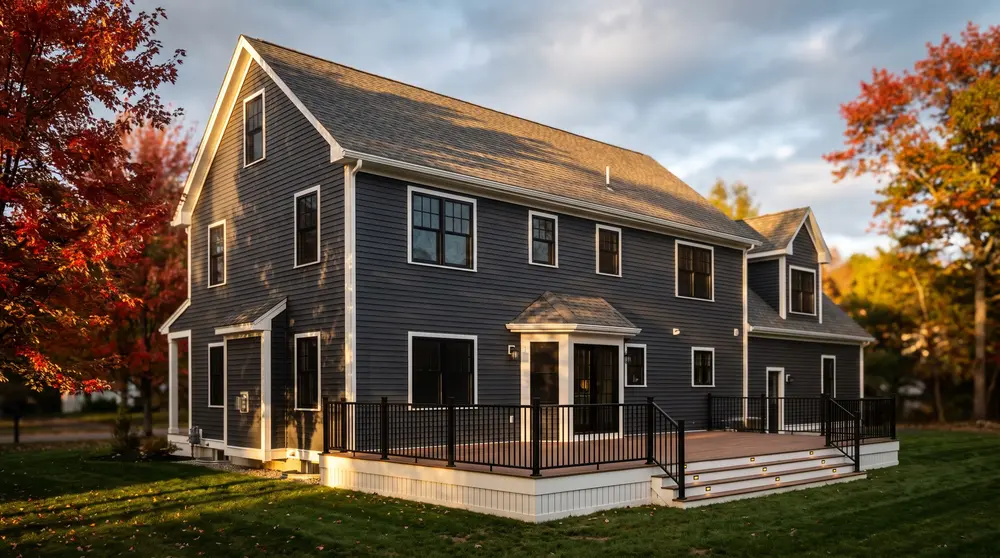

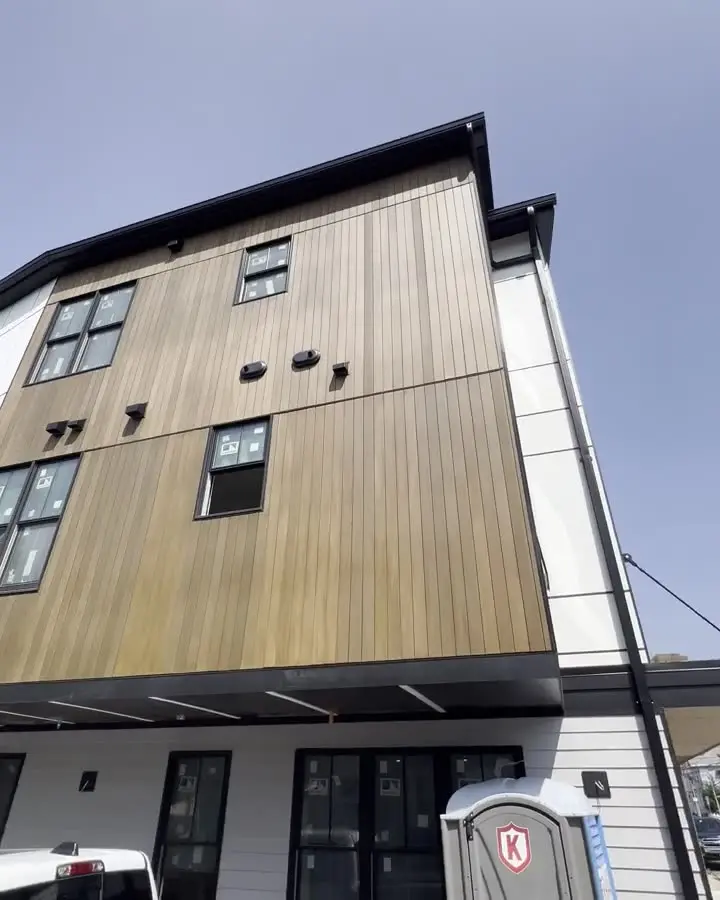
You like the warmth of cedar. You don't like scraping and staining it every few years. Engineered wood and composite siding sits right in that gap. It has real grain texture and deep shadow lines, it's lighter to handle than fiber cement, and it works on everything from a shingle-style cape to a modern addition.
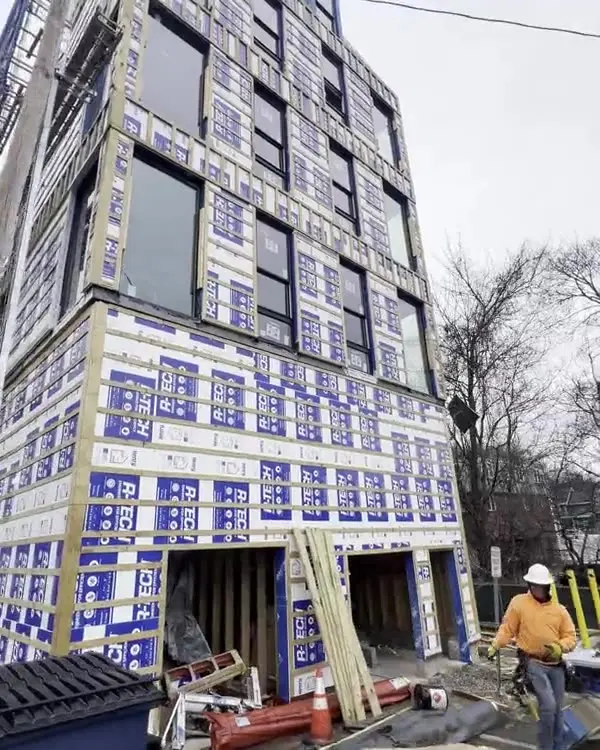
Engineered wood is made with wood fibers, so moisture is the thing to manage. That's where install decides how long it lasts. We seal every cut end, keep your boards clear of the roofline and grade, and tape every seam of your Tyvek wrap so a wet spring doesn't soak into your walls from behind.
Like every job we do, it starts with your walls opened up and inspected. If your old siding was hiding rotten sheathing, you'll see the photos and we'll replace it before anything new goes on. Then it's flashing, wrap, siding and trim, all under our 5 year workmanship warranty, with your material warranty passed straight to you.
What's included
- Removal of old siding and debris
- Substrate checked and documented
- Rotted sheathing replaced
- Tyvek wrap with seams taped and sealed
- Openings flashed to shed water out
- Engineered wood or composite boards
- Cut ends sealed per the manual
- End-of-day cleanup, magnet sweep included
Signs it's time
- Cedar shingles split, cupped or missing
- Stain that fades within a couple of seasons
- Moss and mildew on shady walls
- You want texture vinyl can't match
- Adding on and matching an older wood look
Keeping moisture out of wood-based siding
Shady lots are tough on wood-based siding. Walls that never see sun stay damp, grow moss and dry out slowly after every storm. On those elevations we pay extra attention to clearances at the bottom edge and to how your gutters and downspouts drain, so water isn't splashing back onto the boards.
Cut ends are the weak spot on engineered wood. Every board we trim gets its end sealed the way the manufacturer manual calls for, and we keep fasteners at the right depth so the face isn't crushed. Small details like these decide whether your boards stay flat or swell at the joints.
Behind the siding, your Tyvek wrap does the quiet work. We lap it shingle style, tape the seams, and tie it into the flashing at every window and door. Any water that gets behind the boards in a nor'easter runs down and out at the bottom of the wall instead of soaking into your sheathing.
What happens behind your engineered wood siding
You won't see most of this once the job is done. That's why we photograph it before we cover it.
- Substrate inspected and photographed before it's covered
- Every opening flashed so water gets directed back out
- Seams and laps of the weather barrier taped and sealed
- Fastening and clearances per the manufacturer's manual
- Soffit ventilation kept open, corners and returns sealed
- Site cleared and magnet swept at the end of every day