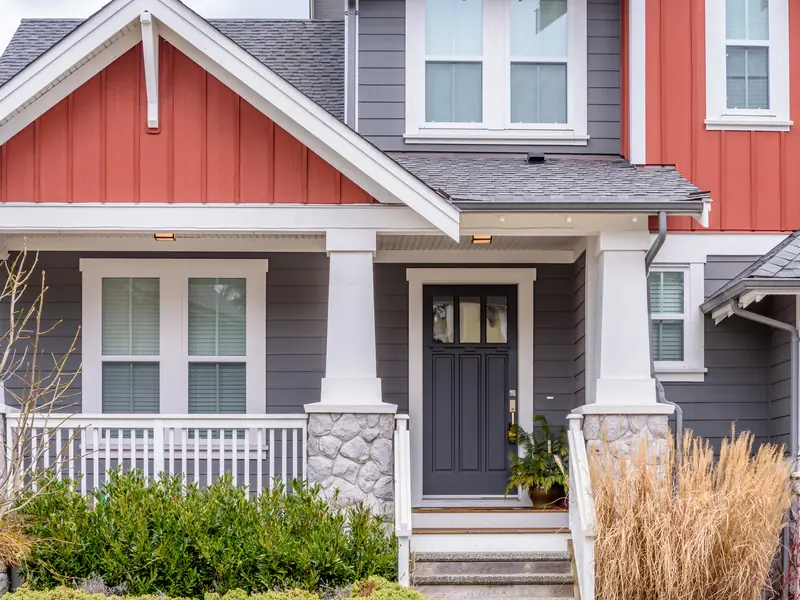


Your front door gets opened thousands of times a year and takes rain, snow and road salt tracked across its threshold. Side doors and access doors into a basement or garage take even more abuse and usually get less attention. When a door starts sticking, dragging or letting in light around the edges, the problem is usually the frame and sill, not the slab.
We pull your old door and frame and look at what's under the threshold. On a lot of older houses, the sill framing has been soaking up water for years. We fix what we find, flash the opening so water gets sent back out, and hang the new unit plumb, level and square so it swings and latches without a fight.
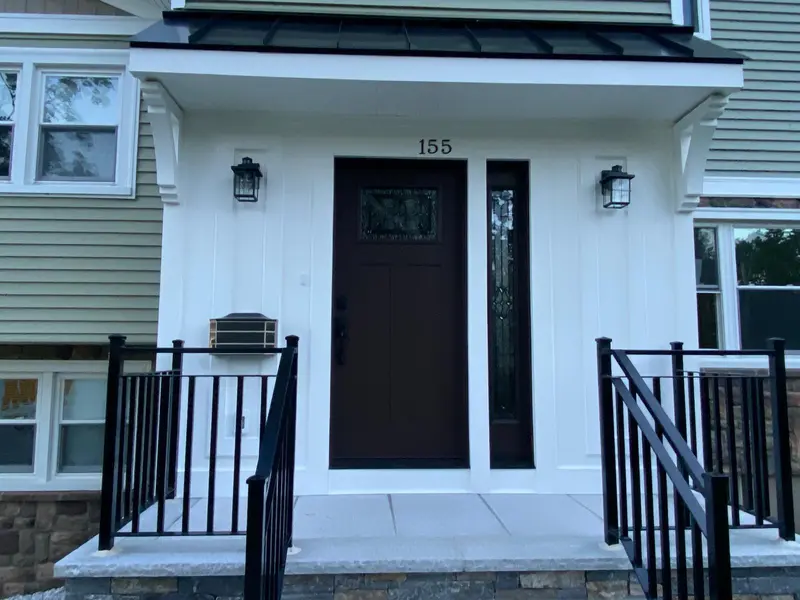
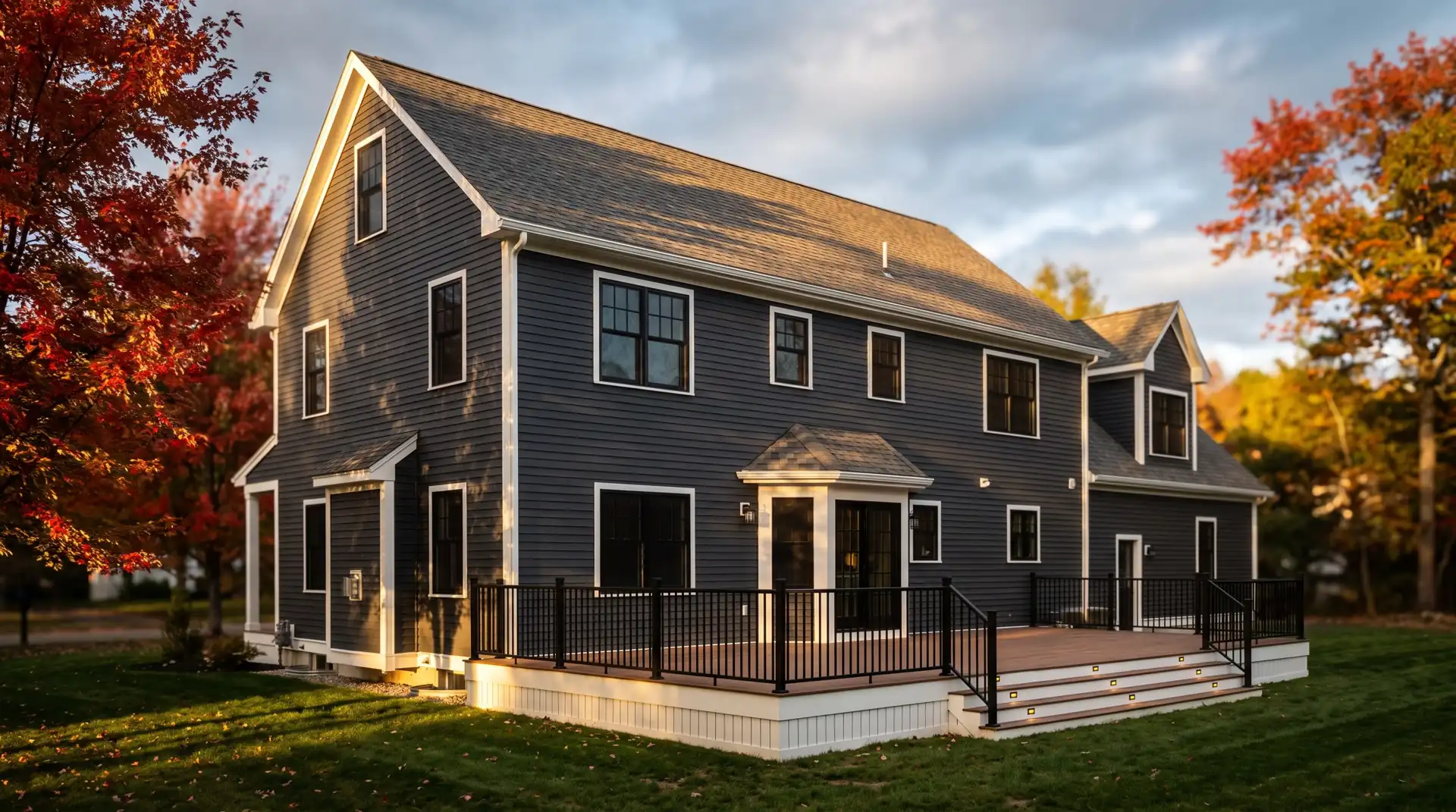
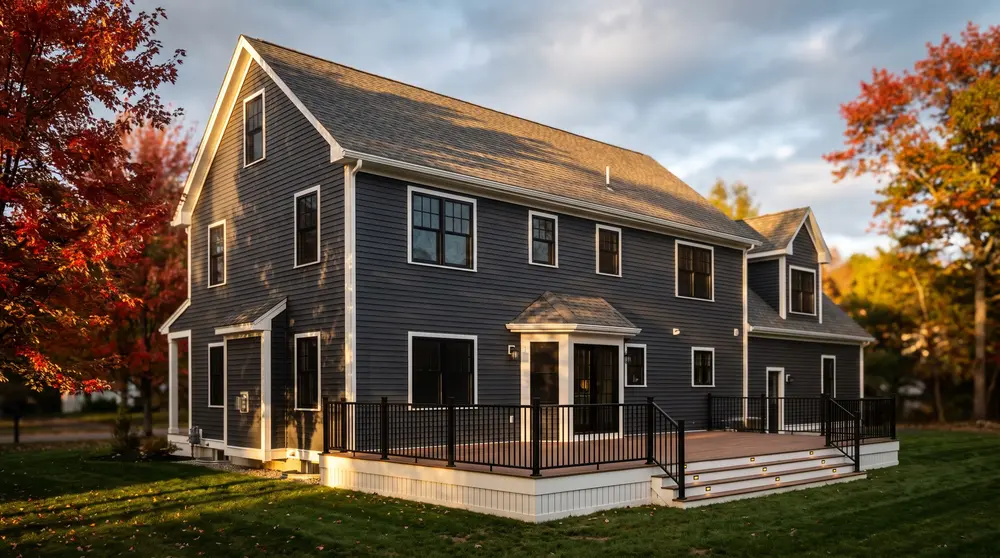
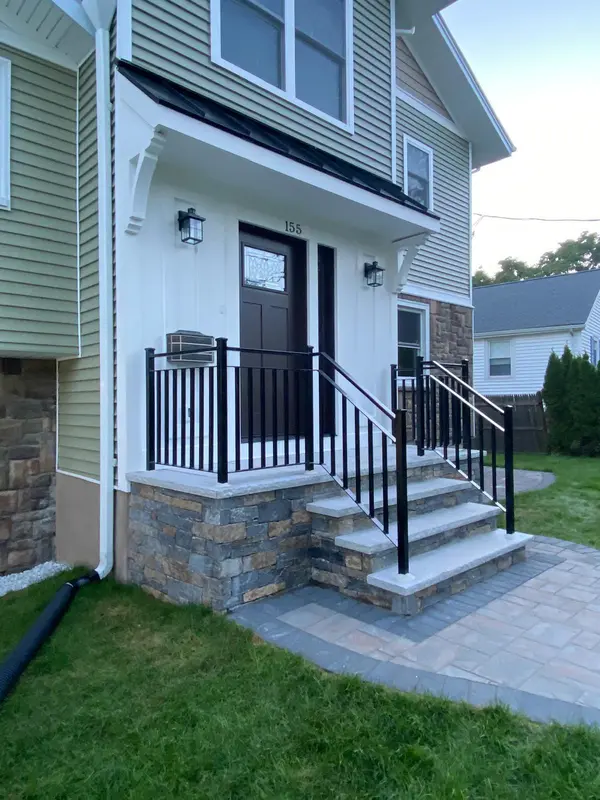
In Ashburnham, we restored a front entry as part of a roof replacement. The door, frame and trim came back together as one finished piece. Your entry gets the same care, whether it's the front door your guests see or the side door into your mudroom that the family actually uses.
What's included
- Removal of your old door and frame
- Inspection of sill framing and threshold
- Repair of rotted sill or subfloor when found
- Sill pan and flashing at the opening
- New door hung plumb, level and square
- Weather barrier taped and sealed around the frame
- Exterior trim wrapped in white aluminum
- Adjustment so your door latches and seals on the first try
Signs it's time
- You can see daylight around the edges of the closed door
- Your door sticks or drags on the floor in humid weather
- The threshold feels soft or moves when you step on it
- Snow or rain blows in under the door during storms
- The lock doesn't line up without pushing or lifting the door
Why we start at the threshold
The sill under an exterior door is one of the wettest spots on any house. Rain runs down the door, snow piles against it, and every winter someone tracks in slush. If that water ever got past the threshold, it went straight into the framing below. We check that framing before the new door goes in.
Then we set a sill pan and flash the opening so any water that gets past the door gets directed back outside. The weather barrier around the frame gets taped and sealed. That's the detail nobody sees once the trim goes on, and it's the part that decides whether your new door is still solid years from now.
What happens behind your door installation
You won't see most of this once the job is done. That's why we photograph it before we cover it.
- Substrate inspected and photographed before it's covered
- Every opening flashed so water gets directed back out
- Seams and laps of the weather barrier taped and sealed
- Fastening and clearances per the manufacturer's manual
- Soffit ventilation kept open, corners and returns sealed
- Site cleared and magnet swept at the end of every day