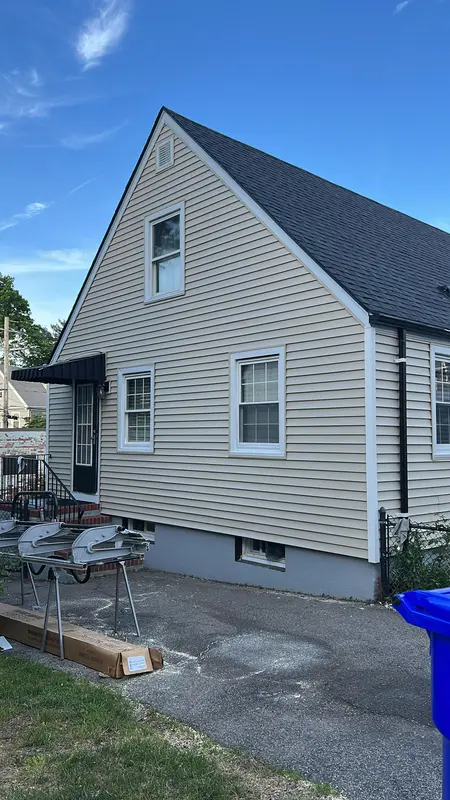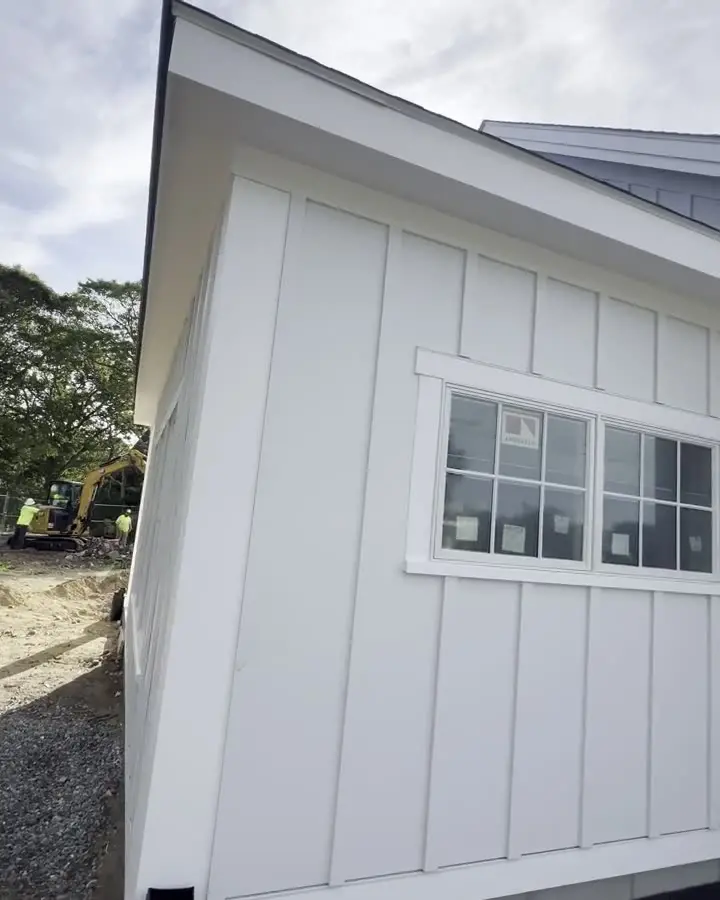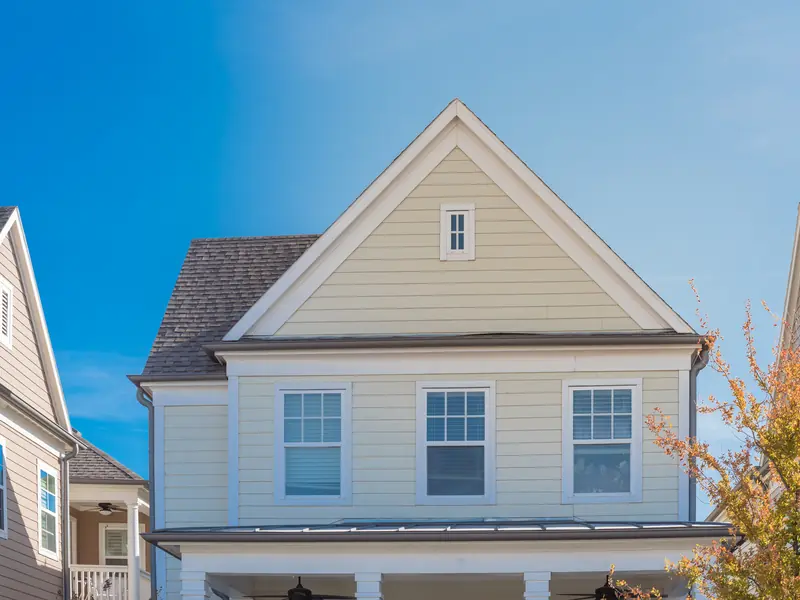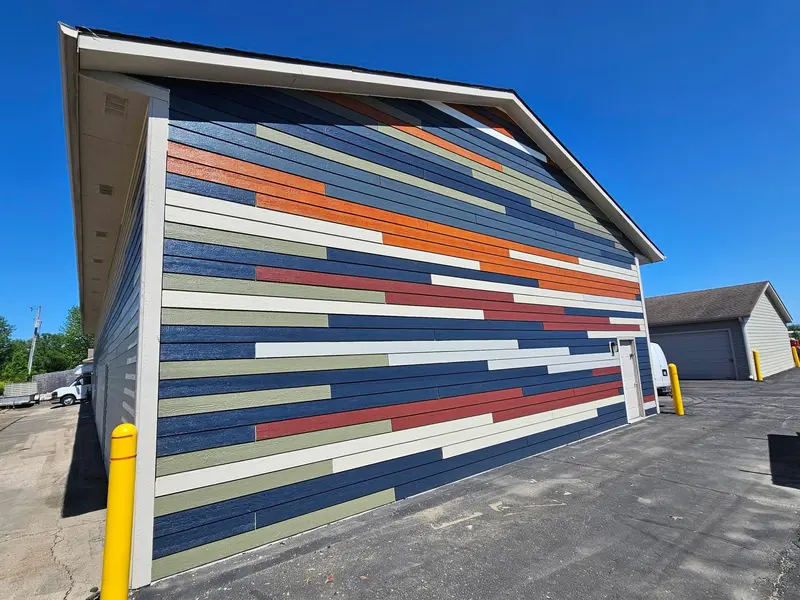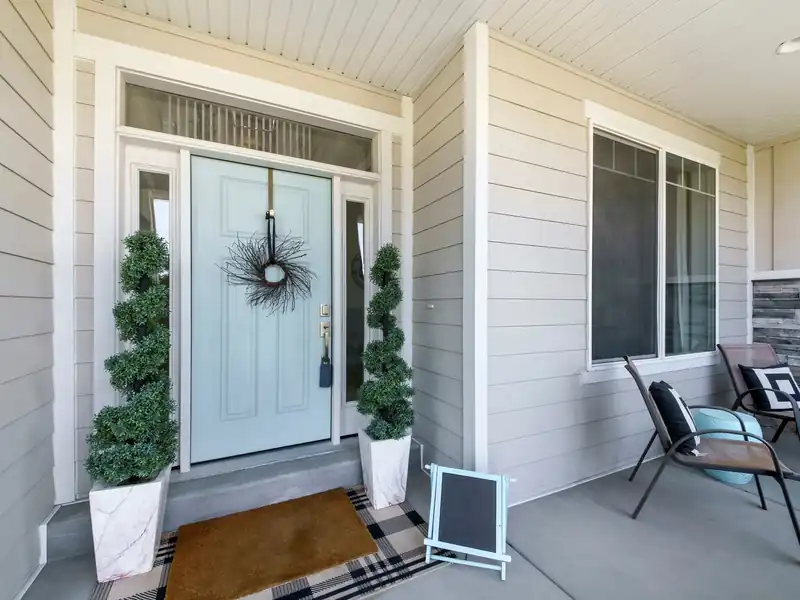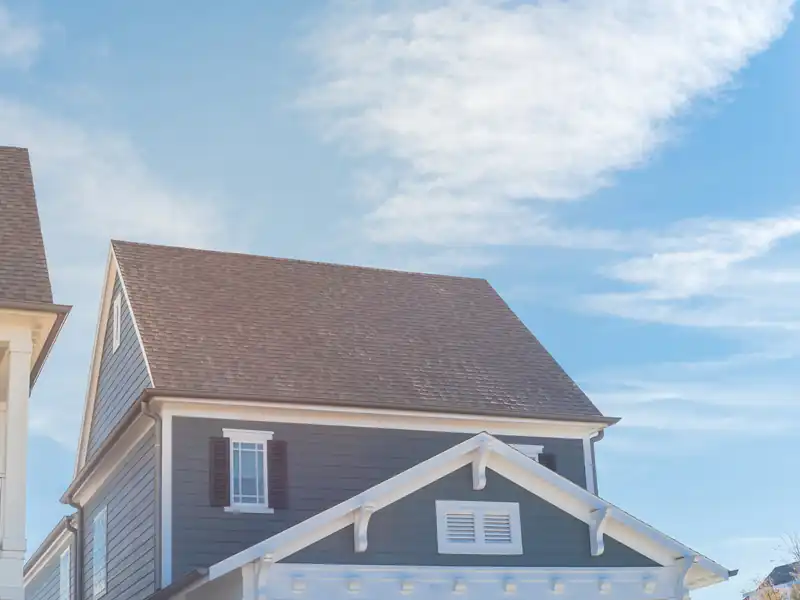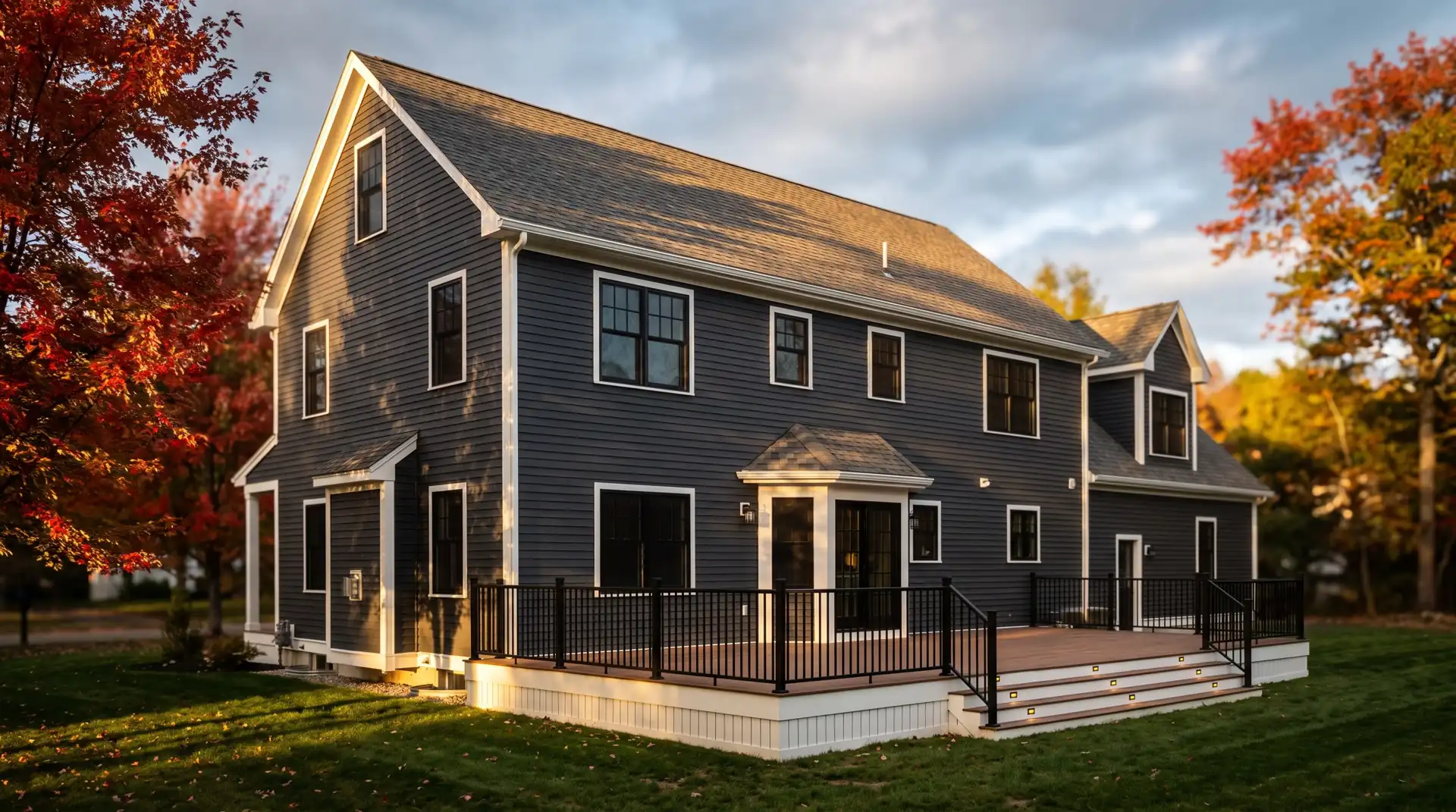


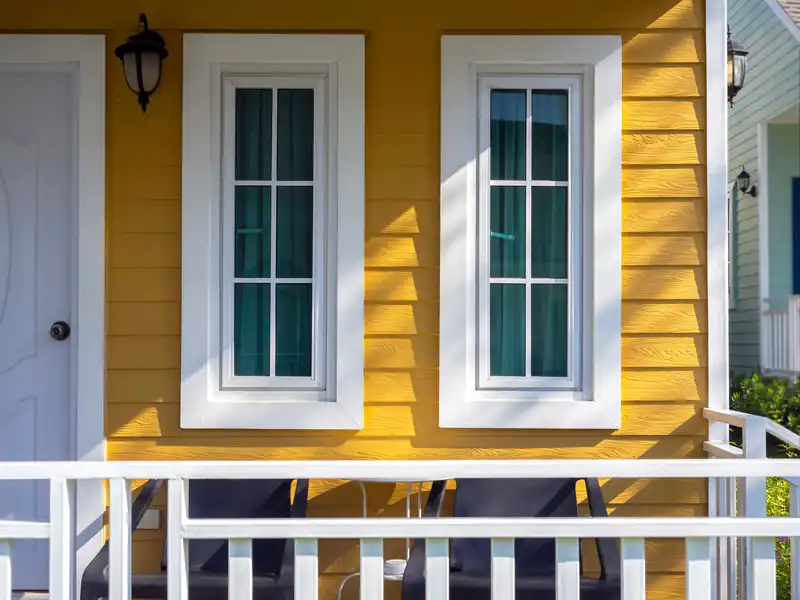
Trim takes more abuse than any other part of your siding. Corner boards, window casings, door surrounds and rake boards catch water at every joint and edge, and painted pine trim is usually the first thing to rot on a Massachusetts house. Cellular PVC trim boards look like smooth painted wood, but they don't absorb water, so they won't rot, swell or grow mold the way wood does. It also holds a crisp, sharp edge at corners and miters, which keeps your trim looking freshly painted for years.
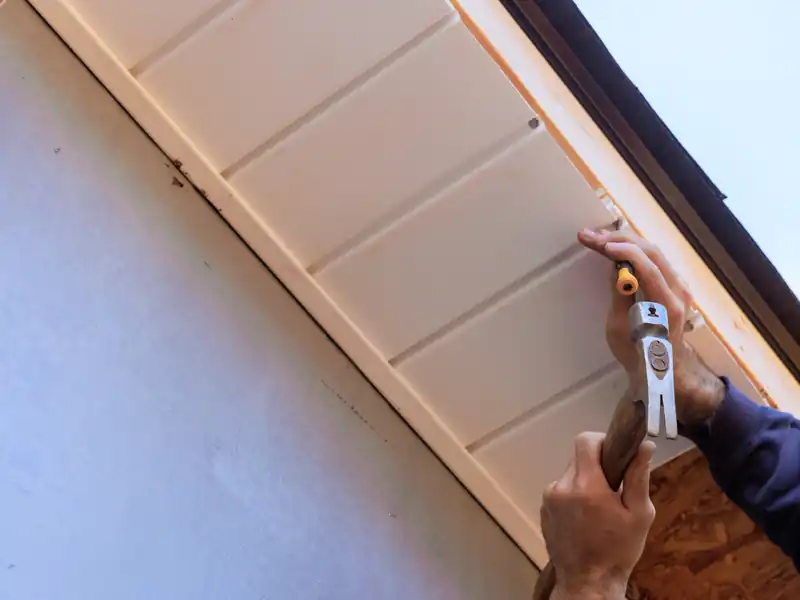
We use PVC trim on full siding jobs and on trim-only repairs. It's the go-to choice for spots that stay wet: the bottom of corner boards, window sills, door casings near a deck, and rake boards under a valley. PVC cuts and routes like wood, so we can match the profiles and widths of your existing trim. It comes bright white and can be painted if you want a color. If you have a decorative molding we can't buy off the shelf, we can build it up from flat PVC stock.
PVC does have one habit you have to plan for. It grows and shrinks in length as the temperature swings, more than wood does. If it's nailed wrong, joints open up in winter and boards bow in summer. We fasten it on the spacing the manufacturer calls for, glue the joints that need to stay closed, and leave room where the board needs to move. We also flash above windows and doors before the trim goes on, so the PVC sheds water away from the openings instead of trapping it behind.
What's included
- Old rotted trim removed and hauled away
- Framing and sheathing behind it checked
- Rotten wood behind the trim replaced
- Flashing at windows, doors and heads
- Cellular PVC boards cut to your profiles
- Glued scarf and miter joints
- Fasteners set and holes filled
- Daily cleanup and magnet sweep
Signs it's time
- Soft or crumbling wood at corner boards
- Paint peeling on casings every few years
- Gaps opening at miters and butt joints
- Rot at the bottom of door casings
- Woodpecker or insect holes in the trim
How cellular PVC trim behaves
Cellular PVC is a foamed vinyl with a smooth, hard skin. It comes in the same sizes as wood trim, usually 3/4 inch or 5/4 inch thick, in boards, sheets and molded profiles. It doesn't take on water, so the cut ends that rot first on pine stay solid. It can even be heat-bent for curved work like an arched window head. Fasteners are stainless or coated trim screws or nails, set just below the surface and covered with plugs or filler.
The thing to respect is thermal movement. A long PVC board can change length by a noticeable fraction of an inch between a cold January morning and a sunny August afternoon. We fasten it every 16 inches or so with two fasteners across the width, close to the ends, and bond scarf joints and miters with PVC adhesive so they don't open. Short pieces and boards in shade move less, while long runs on a south wall move the most, so we plan the joints around that.
White PVC doesn't need paint. If you want a color, it takes acrylic latex paint well, but very dark colors can make the boards run hot and move more. Most paint makers list colors that are safe for PVC. Compared to aluminum-wrapped wood, PVC gives you a solid board with crisp edges and no wood inside to rot. Popular cellular PVC trim lines include Azek, Versatex, Royal Trim, Kleer and CertainTeed Restoration Millwork. Tell us which one you want and we price that exact product, board for board.
What happens behind your PVC exterior trim
You won't see most of this once the job is done. That's why we photograph it before we cover it.
- Substrate inspected and photographed before it's covered
- Every opening flashed so water gets directed back out
- Seams and laps of the weather barrier taped and sealed
- Fastening and clearances per the manufacturer's manual
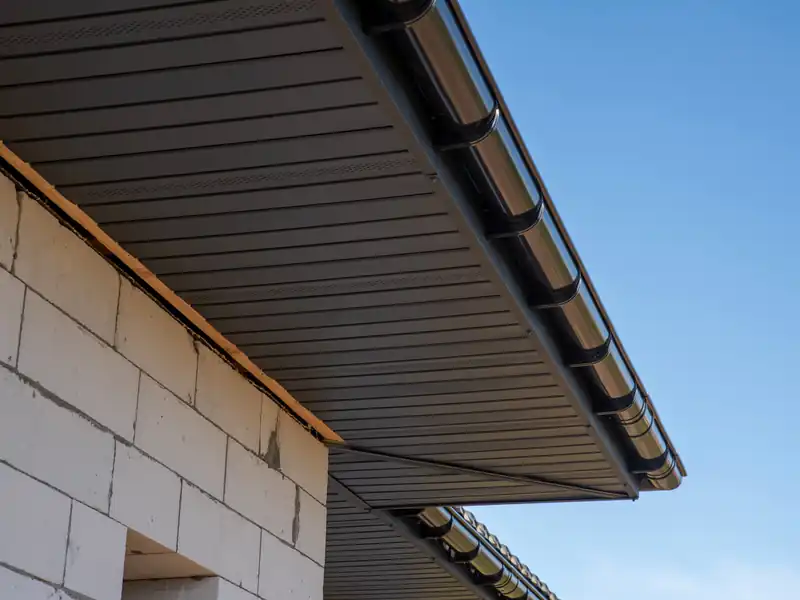
- Soffit ventilation kept open, corners and returns sealed
- Site cleared and magnet swept at the end of every day